In this edition of out Platform History blogs, we head to Buckinghamshire. Just a short distance from the heart of Milton Keynes lies Bletchley station. An area steeped in history, most notably Bletchley Park that was the centre of British code breaking during the Second World War. Now, the area will play a key role in in the future of the railway in Buckinghamshire’s transport links and Britain’s railway revival.
Early History:
Bletchley station’s tale begins in the early 19th century. In the 1830s it was part of the London and Birmingham Railway, by the mid-Victorian period it was a bustling junction, with its timetable proudly boasting additional connections to Bedford, Banbury and Oxford. Because of it’s location, it became a gateway for travel for passengers travelling north, east, south and west. A vital link to the growth of Britain’s railways. During the Second World War, due to Bletchley’s strategic importance, the station and the town had ‘Starlight’ blackout lamps installed which gave off enough illumination to move safely but not give away locations during air raids. North of the station is the Denbigh Hall railway bridge that carries the West Coast Mainline over Watling Street, it dates from 1838, its skewed cast iron arch design is unique for a structure of it’s time. It is now a Grade II listed structure.
Modernisation:
The 20th century saw the railway go through massive progress and also decline. In 1959 the impressive Bletchley Flyover was constructed, carrying the Varsity Line high over the West Coast Main Line. However, by the late 1960s, passenger services on that such route were axed following the Beeching cuts. When Milton Keynes Central opened in the early 1980s, this left Bletchley out of the picture when it came to long-distance trains. This left the station with a much stronger focus on local and commuter services. Despite the reduction of long-distance services, the station endured. Following the introduction of modern signalling, electric trains and a loyal community of passengers, the station began to thrive once again.
Where we are now:
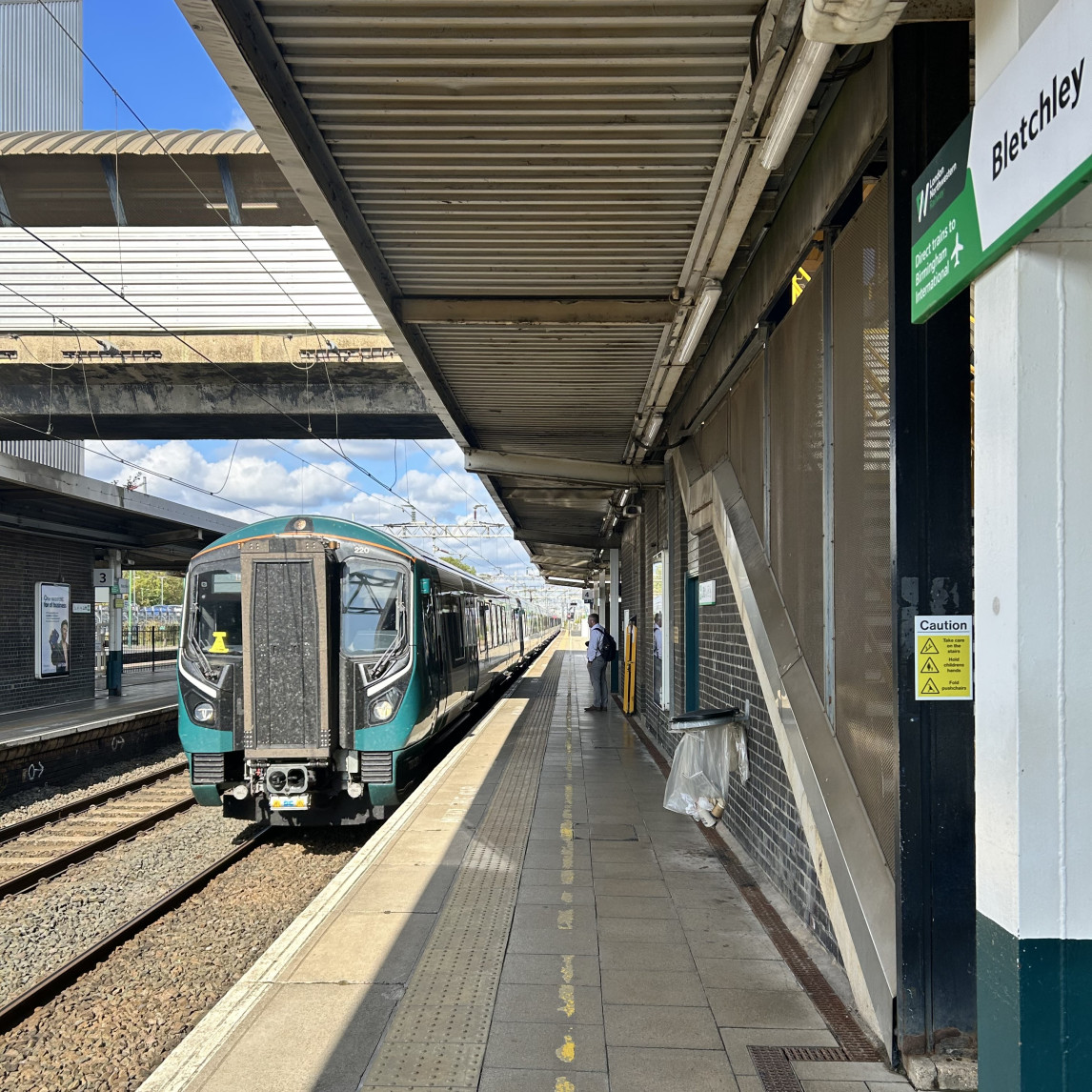
As of today, Bletchley is open and on the rise once again. Major investment has transformed the station and its depot. The newly redeveloped Bletchley depot houses our 730/2 fleet after £80 million pounds were invested into the project. With over 7100 tonnes of steel used, 4,304m of OLE wiring and 4.02km of new track, it’s been a significant effort to build a depot fit for the future. Furthermore, it is also a sustainable depot, with a new solar farm that has 240 panels – providing us with a renewable energy source to help reduce our CO2 emissions by over 26 tonnes per year.
New high-level platforms are being constructed to reconnect the long-lost Varsity line, now being branded as East West Rail. The old flyover has been rebuilt, with new track being laid. The station now see’s the newest addition to the London Northwestern fleet too, the 730/2s. These offer more carriages and 20% more seats than their predecessors helping accommodate more passengers during peak hours.
So, Bletchley stands as an example, if ever needed, that Britain’s railways are continuing.