


Rail industry unites to champion social mobility as Great British Railways edges closer
Back to press releases pageThursday, 11 June 2026
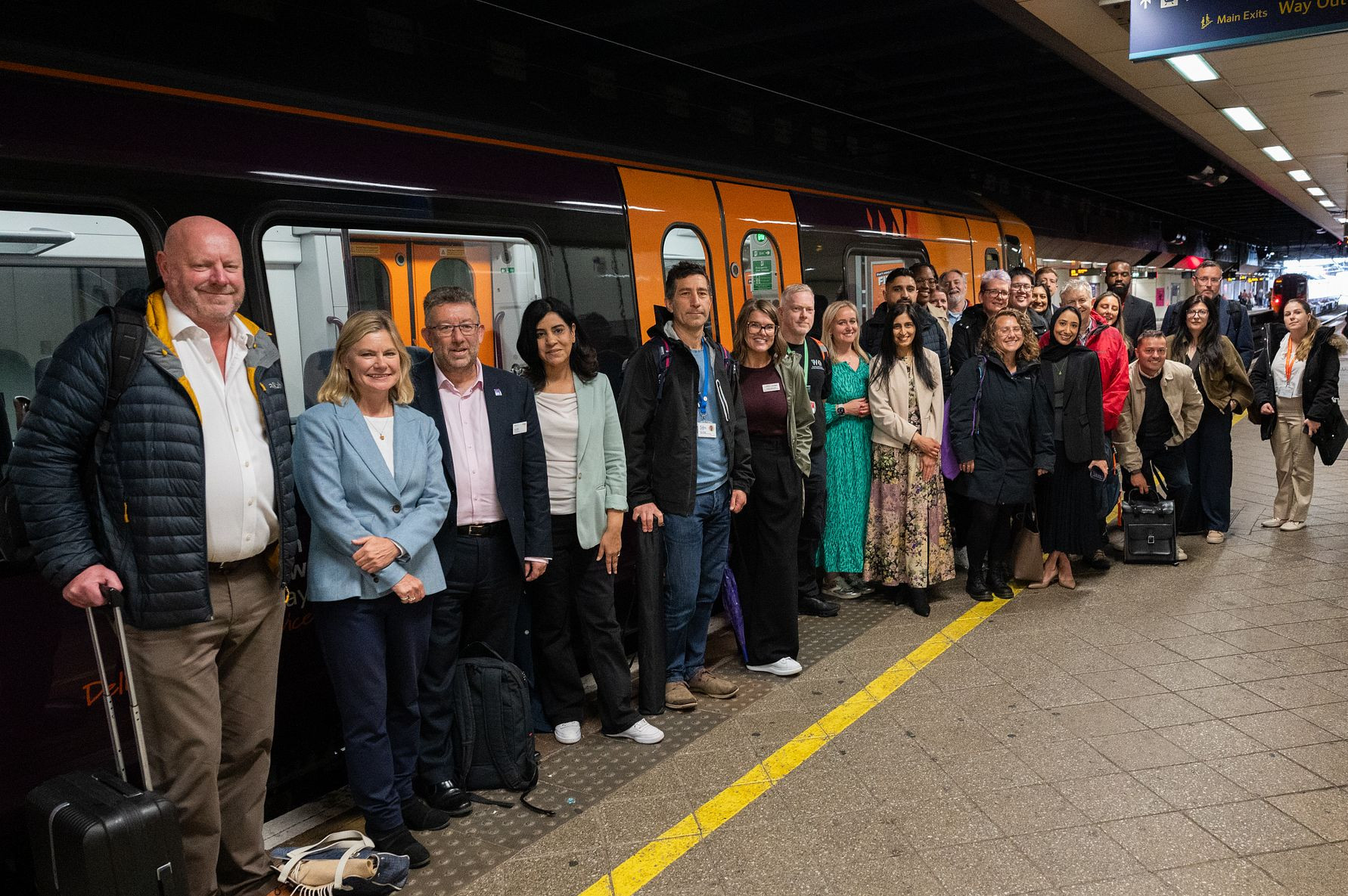
Leaders from across the rail industry are joining forces, taking part in a symbolic rail journey, to champion social mobility and inspire the next generation of talent.
Travelling between Birmingham New Street and Birmingham International, where they supported the Big Bang Fair, one of the UK’s largest science and engineering events for young people, senior leaders and employees from DfT Operator (DFTO), Network Rail and the wider industry came together with key partner organisations to mark Social Mobility Day (11 June 2026).
The railway journey, hosted by West Midlands Railway, was an opportunity to announce their shared ambition to change lives by opening up opportunities in rail and supporting social mobility. United by a commitment to go further and faster, the programme is now focused on scaling impact across the country through deeper collaboration and strong external partnerships.
The programme is working with a group of expert partners that have already demonstrated successful impact within rail and offer strong opportunities to scale. These partners include The Purpose Coalition, The Social Mobility Foundation, The Talent Foundry, The King’s Trust, Youth Futures Foundation, Beyond Barriers, and Community Rail Network. By working together, the industry aims to broaden reach, deepen impact, and deliver meaningful change at scale.
The activity was led by the rail industry social mobility steering group – a group of rail leaders with lived experiences of social mobility and a shared passion to create change. ‘Beyond Barriers’, a community of rail colleagues and allies from less advantaged backgrounds, is also part of the taskforce, providing a safe space for colleagues to talk about shared challenges.
The group is committed to make rail a route to progress - changing lives by opening opportunities for individuals and communities across the country ensuring no-one gets left behind. They are seeking to positively impact 5,000 lives a year through:
- Improving representation of those from less advantaged socio-economic backgrounds within the rail workforce by 1,000 annually.
- Supporting 1,500 people and colleagues from less advantaged backgrounds to start apprenticeship schemes annually.
- Supporting 500 colleagues from less advantaged backgrounds with career progression tools annually
- Creating 2,000 engagements through attendance at events like the Big Bang Fair for students from less advantaged communities annually.
The programme, co-sponsored by Steve White, Managing Director at Southeastern Railway and Paul Rutter, Route Director of the East Coast at Network Rail, and Chaired by Navleen Kalra, Network Rail’s People and Transformation Director is working to widen access ensuring that background is never an obstacle to a successful career in rail.
Steve White, Managing Director at Southeastern Railway, and Co-sponsor of the Rail Industry Social Mobility Programme, said: “We know that rail has the power to change lives for the better. Working with our partners, we are committed to addressing the challenges of skills shortages and an aging workforce in a way which gives opportunities to more people from less advantaged backgrounds.
“Our ‘social mobility train’ symbolises the ambition of the rail industry to ensure that no one is left behind. We will provide meaningful work experience for young people, recruit more staff from disadvantaged backgrounds, and ensure those people can thrive in our industry.”
Paul Rutter, Director of East Coast at Network Rail, and Co-sponsor of the Rail Industry Social Mobility Programme said: “Where someone grows up, the school they attend, their family circumstances, and whether they’ve had chances to start again after setbacks, all shape the opportunities available to them.
“Social mobility is about ensuring those factors do not determine someone’s future. Our focus is on equity as well as access - recognising that different people need different routes, support, and starting points to succeed. That is how we build a railway that truly works for everyone.
“Through this programme, we are creating an industry where people can get in, get on, and get where they want to be, opening up opportunities and supporting individuals to progress, regardless of their background.”
Ian McConnell, Managing Director at WM Trains Limited, operator of West Midlands Railway and London Northwestern Railway, said: “We are proud to support the Rail Industry Social Mobility Programme alongside DFTO and Network Rail.
“The rail industry offers fantastic opportunities for everyone, and this event highlights the importance of working together to champion social mobility and remove barriers for people from disadvantaged backgrounds.
"Through our apprenticeships, annual partnership with the King’s Trust, and our education outreach, we are committed to encouraging more people to consider a career with us and to helping them access skills and employment opportunities.”
Notes to Editors
For further information contact [email protected]
- The Industry Social Mobility Programme is working to widen access to rail careers, ensuring that background is never a barrier to opportunity. The programme is making rail a route to progress, changing lives by opening opportunities for individuals and communities across the country, so that no one gets left behind.
- The Big Bang Fair is a major UK event promoting science, technology, engineering and maths (STEM) careers for young people.
- Govia Thameslink Railway, c2c, Greater Anglia, LNER, Northern, Southeastern, South Western Railway, TransPennine Trains, and WM Trains Ltd are under public ownership, managed by DfT Operator (DFTO) – which is managing train companies as they move into public ownership ahead of the creation of Great British Railways (GBR).
- More than half of all the rail journeys that GBR will ultimately be responsible for are now on services run by publicly owned operators.
- On average, publicly owned operators under DFTO perform better on punctuality and cancellations than those yet to come into public ownership (source ).
- GBR will be accountable to passengers and will drive a relentless focus on responding to their needs. Responsible for coordinating the whole network: from track and train, to cost and revenue – GBR will deliver lasting change and build a railway fit for Britain’s future, owned by the public, for the public.


